
Imagine spending $10,000 on ads and having no clue which click actually turned into a loyal customer. That’s the reality for businesses without a strategy. Every year, companies pour money into the same old channels and watch their budget start bleeding without ever moving the needle. Nothing will consume your budget faster without a strategy than stagnation in growth. Companies invest in established channels each year and “bloodthirsty” without ever moving the lever at all.
Some chase the viral moment others double down on some platform cause a competitor happens to be there and most end a year unable to say which dollar brought them what customer. It is a truth that endures in companies that scale, which do so by working with a data-driven marketing agency not against gut instinct.
The numbers back this up. As per a research published by McKinsey, data-centric enterprises are 23 times more likely to acquire and 19 times more likely to retain new customers profitably. Which is not a small advantage, it is actually a permanent one multiplied every single year that your competitors continue rolling the dice.
In this tutorial, we have broken down what a marketing agency does, why hiring a professional marketing agency is essential for your business, and how effective data-informed marketing can transform your growth, how it looks practically on the ground – just to make sure you know what to expect in 2023 (which is surprisingly important), and even how to choose your partner on 2026.
So, What Is a Results-Driven Marketing Firm?
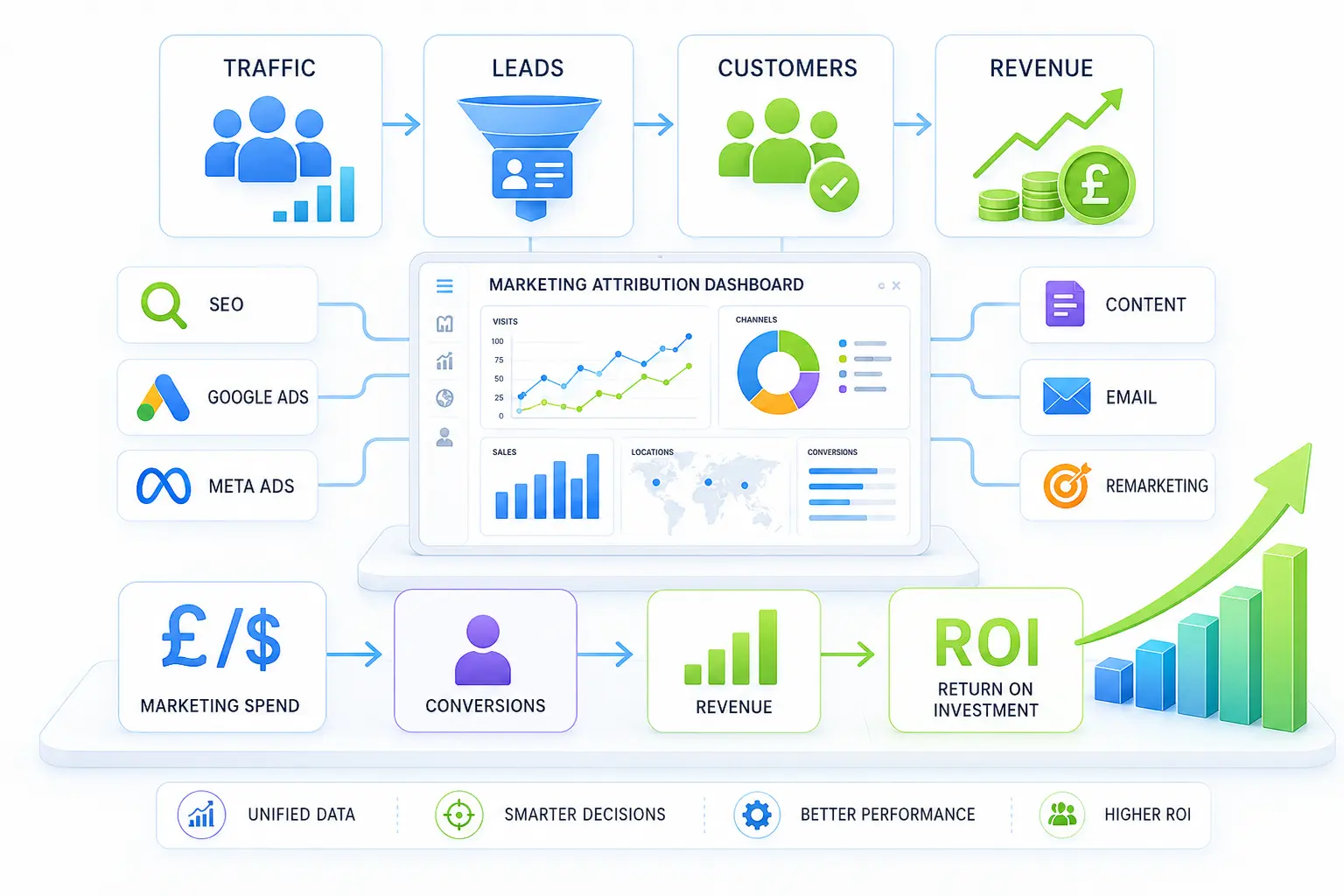
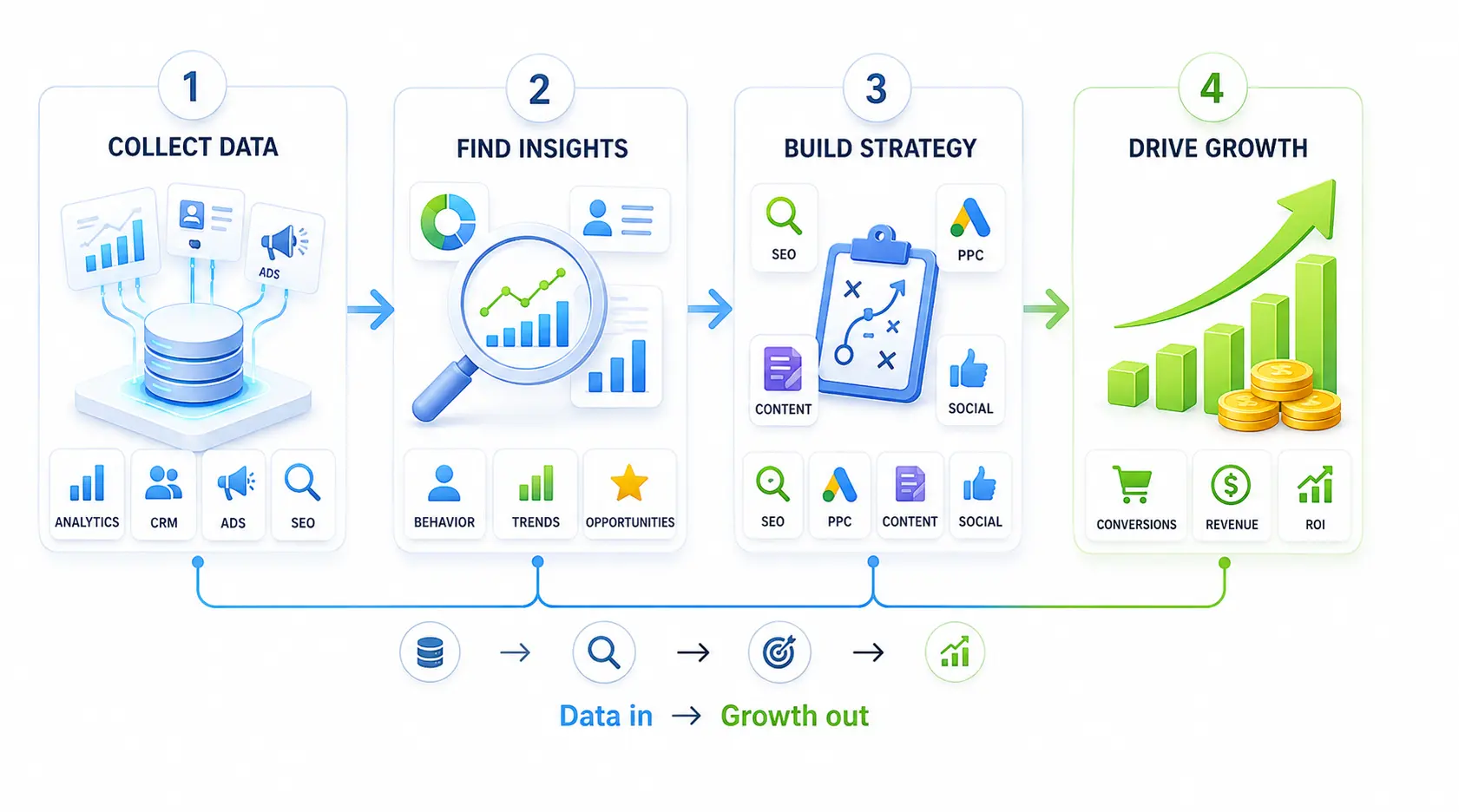
Data-based marketing agency means every campaign decision, channel and spends, message and timing is dictated by REAL numbers – not speculation. Data is gathered from across the web – from your website, CRM, ads, social and email – to create a precise course of customer journey tracked all the way from first touch to sale.
The old school of marketing chased smoke-and-mirrors impressions and awareness with fuzzy numbers from surveys and brand-lift studies. Now that is how you measure what really matters backlinks, conversions, LTV and finally ROAS. Results are seen in days not months, as opposed to waiting on knowing that a campaign never worked for an entire quarter.
An excellent partner devises a strategy, and then executes. This means establishing targets, crafting the ideal audience avatar, discovering the proper platforms and devising a framework that connects all of our actions to something measurable. What that separation does is this: it separates a true strategy partner from just an agency that does things on autopilot – never asking the whys.
Here is a quick look at what a top-tier marketing agency usually brings to the table:
- SEO and technical site optimization
- Habitat for Creativity Local – Paid Media (Google, Meta and other channels)
- Content marketing
- Email automation and lifecycle marketing
- Conversion rate optimization (CRO)
- Social media management
- Competitive intelligence and attribution modeling
What Businesses Get Wrong In Absence Of Strategy
You do SEO without the content plan that supports it. The second mistake is writing the whole content but completely neglecting to optimize for landing page when you are investing on advertisements. To reach all and not just those more likely to buy. Chasing followers and likes instead of CAC & CLV These disjointed efforts don t add up to even half the desired impact, they bleed your budget and no one has a clear sense of results.
Marketing teams are often too specialized internally and need to deliver on top of their day-to-day work in order to create a genuine playbook for growth. First and foremost a designer is not thinking attribution (duh) and does your social media manager really have time to analyze the latest CRM data? This is why an outside perspective, a cross industry view of the world which a data driven marketing agency can offer, does not exist in-house even with A-plus talent.
The Real Business Benefits
Deeper customer insight. With the CRM data, website behaviour and purchase history combined will let you know who buys, why they buy – and what is stopping those that do not. In doing so, you get your messaging to speak about actual intent over any guesses made on how members engage with your audience.
Higher ROI. Google/BCG estimates leaders leveraging data driven decisions will produce 6 times higher profits compared to those that don’t. The difference is not based on how much money you spend, but rather how successfully you utilize the experience.
Smarter budgets. Performance data, meanwhile, will tell you precisely what channels deliver and which ones are quietly burning through cash. That takes the guesswork out, it takes the internal battle of how you budget, and just resources a channel like any other channel has always been resourced.
How the Process Works
Discovery. It begins with a thorough marketing audit, an objective analysis of where your data stands today and clear revenue and churn goals that become the KPIs for every campaign moving forward.
Research. You build in tracking of your competitors and analysing organic ranking, bring together your own internal data as well as intelligence around paid spend to create personas from reality not best guesses.
Channel planning. Go where your audience is not whatever the hottest channel is right now. Each channel has a role, be it awareness, consideration or conversion and an attribution model makes it apparent at which touch points results are driven.
Basic Data Sources – GA4, heatmaps, CRM data, Google Search console data, data from paid ad (Google and Meta platforms), social media insight (Facebook, Instagram etc.) and emails analytics are some of the basic data sources going into this process. A singular dashboard pulls this all into one place, rather than six logins with isolated data that wont drive action- the best agencies know this.
Building an Effective Strategy Framework
Everything starts from the revenue target, and you calculate backwards how much traffic required to achieve this number – customers are a function of conversion rate which is a function of traffic. If you set a vague goal such as “expanding brand awareness,” then that is what you will get: vague, hard-to-measure outcomes. Everything is anchored to revenue and that truly holds people accountable.
Develop personas based on data not your hunches – real customer interviews, CRM analysis and even support ticket trends not a dude invented in a marketing brainstorming session.
These are the personas were built based on real pain points, triggers and locations (as in channels you can find our audiences) and what content they expect.
Measure KPIs that directly link to revenue driving business results: CAC, CLV, ROAS, marketing ROI and default conversion rate. More than 3:1 for CLV to CAC ratio (that is the customer is worth three times what it costs you to get them)
Channels In Which To Make Additional Investment By 2026
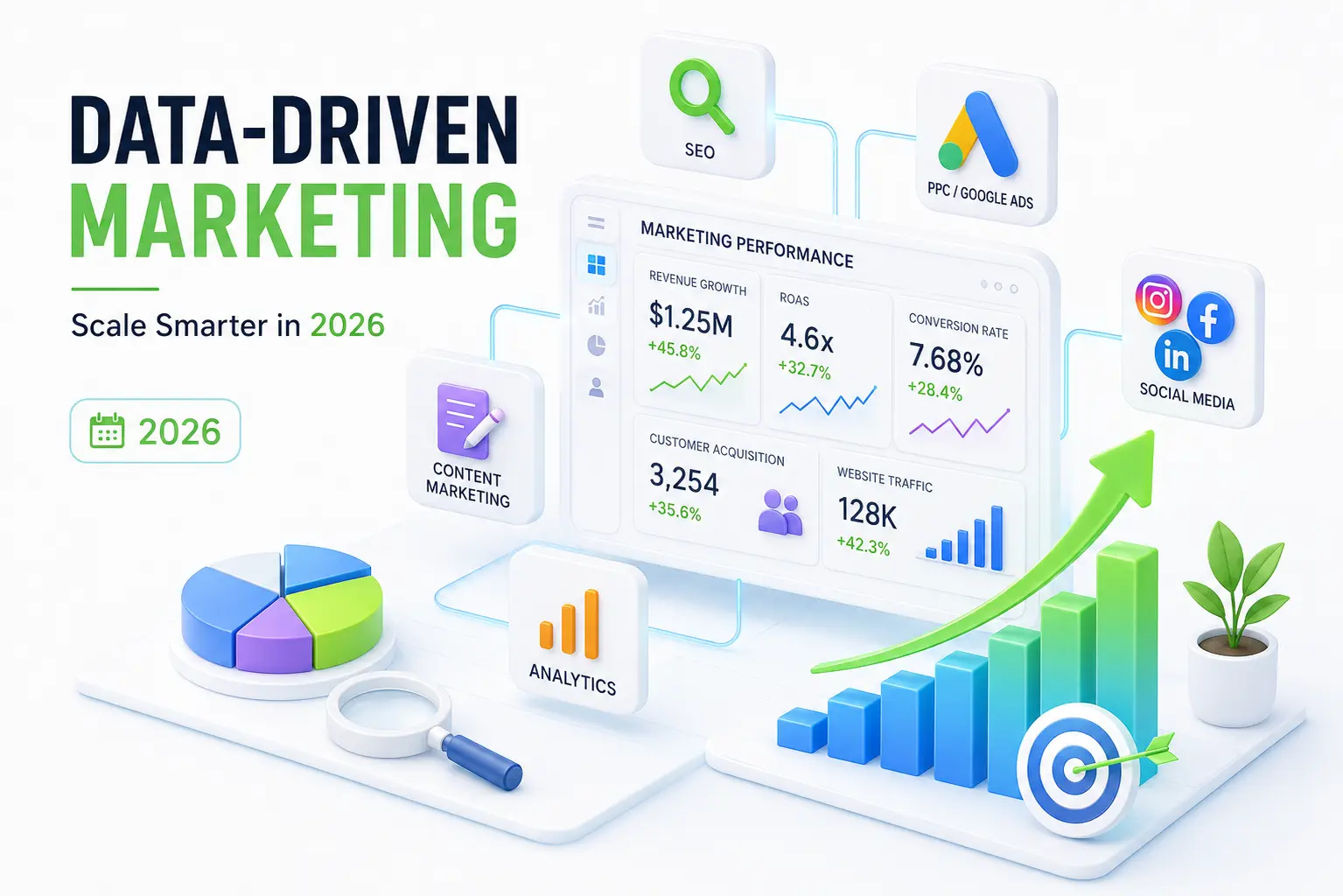
SEO vs Paid. As opposed to paid channels, SEO is compounded over time. Even after being published for years, a single piece of exceptional content can still be paying the inquiry dividends. That is as true of technical factors such as site speed and Core Web Vitals as it is the writing itself.
PPC is a great marketing medium providing swift and steady results so its ideal to use during product launches or short-term turn over. It involves disciplined bidding and ongoing management of negative keywords to minimise wasted spend.
Content marketing builds domain authority, picks up backlinks and basically has a positive impact on nearly every other channel it comes into contact with – from SEO rankings to email nurture sequences.
The data shows that E-mail and Marketing Automation still has the highest ROI of any channel. You lose leads after sending a single reminder follow-up, but with automated and timely customized follow-up sequences you earn these leads back.
Where AI Fits In
Predictive analytics instead uses past data to decode who is the tip of multiple customers converting, whose probabilities of churn could be looming and buyers primed for being taken in by a repeat transaction so that your teams can stop running around chasing lost causes.
The AI that lies behind dynamic content, intelligent recommendations and what are increasingly true one-to-one experiences at scale. Gone are the days where such functionality was restricted to enterprise-only platforms, similar capabilities can now be found in very cost-effective tools like HubSpot and Salesforce at scale.
Apart from personalization, AI also eliminates repetitive data entry, it cuts down reporting latency and human errors so that your team focuses on strategy and creative work rather than spreadsheets.
Proven Industries That Benefit Most From a data driven digital marketing agency
This is exactly where a data driven performance marketing agency earns its keep. Success from data-informed marketing is possible in pretty much any industry, but the biggest gains will often be for companies who work on complex customer journeys or high order values in highly competitive markets. This tier encompasses e-commerce, SaaS, healthcare to even real estate and manufacturing (even if they seem worlds apart). Even local businesses with tactical local SEO and hyper-targeted campaigns can achieve measurable successes.
5 Signs That You Need A Performance Marketing Agency
These are the clearest signals that a good marketing agency could turn things around
- Nobody provides the answer and it is apparently declining since 10 years
- When CAC rises without an equal increase in lifetime value (CLV)
- Can you see how the website visits are skyrocketing, but the conversions are crashing?
- One of the biggest challenges with measuring the impact of marketing on returns to your business (the dreaded marketing ROI) is that it’s rarely really possible to consistently measure (and often you can’t explain potential drivers of this poorly anyway)
- The spending pressure hack is getting in the way of revenue growth
Any one of these indicators on its own is often enough reason for a strategic audit. One or two at a time = your entire marketing process is likely in need of a rebuild rather than patch-over
How to Pick the Right Marketing Agency
Picking the right data driven marketing companies starts with checking their track record.
Validate their experience. Seek results which can be measured in your stage rather than wide success stories with case studies by virtue of the same industry facing a similar challenge.
Ask about their tech stack. Good agencies should be connected to GA4, Google Search Console, either Ahrefs or SEMrush, and Google + Meta Ads (and the non-trackable ad networks) plus a relevant well-connected CRM and email platforms. If the agency cannot clearly explain what tools it is using and what each tool aims to accomplish, run as far away as possible.
Questions to Consider Before Signing:
- What metrics will you track, and how do those link to my revenue objectives?
- Reporting: What metrics are you going to report back on, when and how often?
- What about the bombed or complete failure to launch campaign?
- What tools do you use for Data Analysis and Reporting?
- How does marketing strategy align with my larger business objectives?
Future Trends: 2026 and Beyond
First-party data is critical. With third-party cookies becoming extinct in browsers and privacy legislations tightening up in most markets, the only way a data grid marketing agency can deliver great targeting & personalization of your content for your customers is going to have to be first-party. You have got to own data, email lists, CRM records, logged-in user activity.
AI as the backbone. Artificial intelligence has revolutionized automated real-time personalization, predictive lead scoring, chatbots and even content generation for any marketing agency. Agencies that are already utilizing AI for segmentation, optimization and forecasting will continue to provide their clients with a concrete advantage over those agencies who do not.
Omnichannel personalization is the norm in data driven marketing. It takes 6 to 8 touchpoints for customers like you are, before they convert. Whereas broken experiences that lay in varying levels of state with each new platform is where data unification across all channels finds their mark; where every single journey matters, always appropriate and true.
7 Tips To Maximise An Agency Partnership
Set goals and deadlines. From the very start, be clear about what you want to achieve and by when. This is exactly how you give your marketing agency the direction they need to be able to support your vision.
The number basis is realistic, not aspirational. If you want a performance marketing agency partnership to take off the secret is not to share your hunches or best case scenarios, but real and accurate business stats. Arguably, with data from the real world your agency makes better judgments and accelerates output.
Make your agency accountable. Schedule regular progress review check-ins. Having a clear path of what is to be delivered (as your agency knows they will deliver results), keeps everybody on the same page and aligns you with what you are really trying to achieve.
Focus on long term value instead of short term wins. Quick wins are only a look nice on paper, but last growth comes from compound strategies over the years. The best performance-based marketing is not about spikes, but sustainable wins.
Encourage open discussion. Please feel free to give me your feedback and readings, though. A great partnership is built on trust and transparency and a willingness to go in to the trenches together.
Collaborate on strategy. Think of your agency as a part of your team. Maintain alignment of your marketing with your business by sharing trends, customer feedback, and other insights.
Enjoy the victories and take lessons from defeats. Recognise and reward your agency’s hard work. Dig in and figure out as a team why things didn’t work (or even worse, lose your way) and correct the path moving forward.
Follow these steps to forge a strong, mutually rewarding relationship with your marketing agency and ensure that your investment goes further than you do.ng, rewarding partnership with your marketing agency – and make sure your investment works as hard as you do.
What You Can Expect: The Right Partnership
- Better qualified candidates due to data-backed targeting
- With Prados conversion and channel specific strategy optimize for revenue growth
- Increasing customer retention with lifecycle marketing
- A significant basis of trust in a brand, built through establishing effective SEO and copy
- Long-lasting competitive advantage through consistent data and AI driven innovation
Final Thoughts
When you think about it, working with a data-driven marketing agency isn’t just a bonus anymore-it’s the starting point for any business aiming to grow. The businesses that will truly scale by 2026 are the ones embracing data-driven marketing and ongoing optimization, squeezing the most value from every marketing dollar. It’s not the companies relying on guesswork or hoping for luck that will win, but those who let data guide their decisions. If you want your marketing agency to deliver real results, a data-informed approach is essential.
Consider your marketing now and check it against the red flags above. At this point, when your approach looks like a red sign which have many warning sighs, you need to ask for data driven marketing agency who will cofficiate the way to get scaled through data instead of guessing.
FAQs
What on earth use is this kind of agency to my enterprise?An Eliminate: a great marketing agency plans strategy around real data and measurable outcomes not guesswork (or departments) so every campaign links back to your revenue targets. That is the whole point of hiring a data-driven marketing agency in the first place.
But chill, what result has it brought to your business?PPC is Evidence-based. Rather than working on guesswork, this marketing agency replaces reliance on guesswork with data driven marketing decisions and builds campaigns catered specifically to result in measurable and trackable outcomes instead of an intangible brand awareness.
Which industries benefit most?A metrics-focused marketing firm works especially well with e-commerce businesses, SaaS startups, healthcare, and real estate and local business types with a clear end goal that can be tracked easily.
How is success measured?You measure performance KPIs connected to revenue, not vanity metrics like impressions or followers: CAC, CLV, ROAS, marketing ROI and conversion rate.
Fill me up with the one that suits for my business?Seek real proof of impact, strong analytics capability, exceptional reporting transparency, alignment on your business goals at the center of a marketing agency’s strategy (not simply a me-too playbook